
How Many Scoops of Coffee Do You Need per Cup | Home & Office Brewing Guide
If your office coffee tastes inconsistent, the cause is often inaccurate measurements rather than the beans or equipment. At BostonbeaN, we help coffee lovers and workplaces achieve consistent coffee by combining quality beans, appropriate brewing equipment and practical guidance. Whether you manage office coffee stations or seek to brew your perfect cup at home, understanding how much coffee grounds you need is essential.
Quick Answer
- Standard ratio: 1 scoop (2 tablespoons) per small cup (5 to 6 ounces of water)
- For stronger coffee, add a little more coffee grounds than usual
- For lighter coffee, use slightly less than one scoop per cup.
- A 12-cup coffee maker typically requires 12 scoops or 24 tablespoons of ground coffee.
- The ideal brewing temperature is between 195°F and 205°F.
For most, one scoop per standard 6-ounce cup produces a balanced flavor without bitterness or weak extraction.
Key Takeaways
- A standard coffee scoop equals about 2 tablespoons of ground coffee.
- Grind size, roast level and brew time all impact flavor.
- Measuring coffee by grams creates more consistent brewing results.
- Fresh coffee beans and clean brewing equipment improve taste.
- Water filtration plays a major role in coffee quality.
What Is a Standard Coffee Scoop?
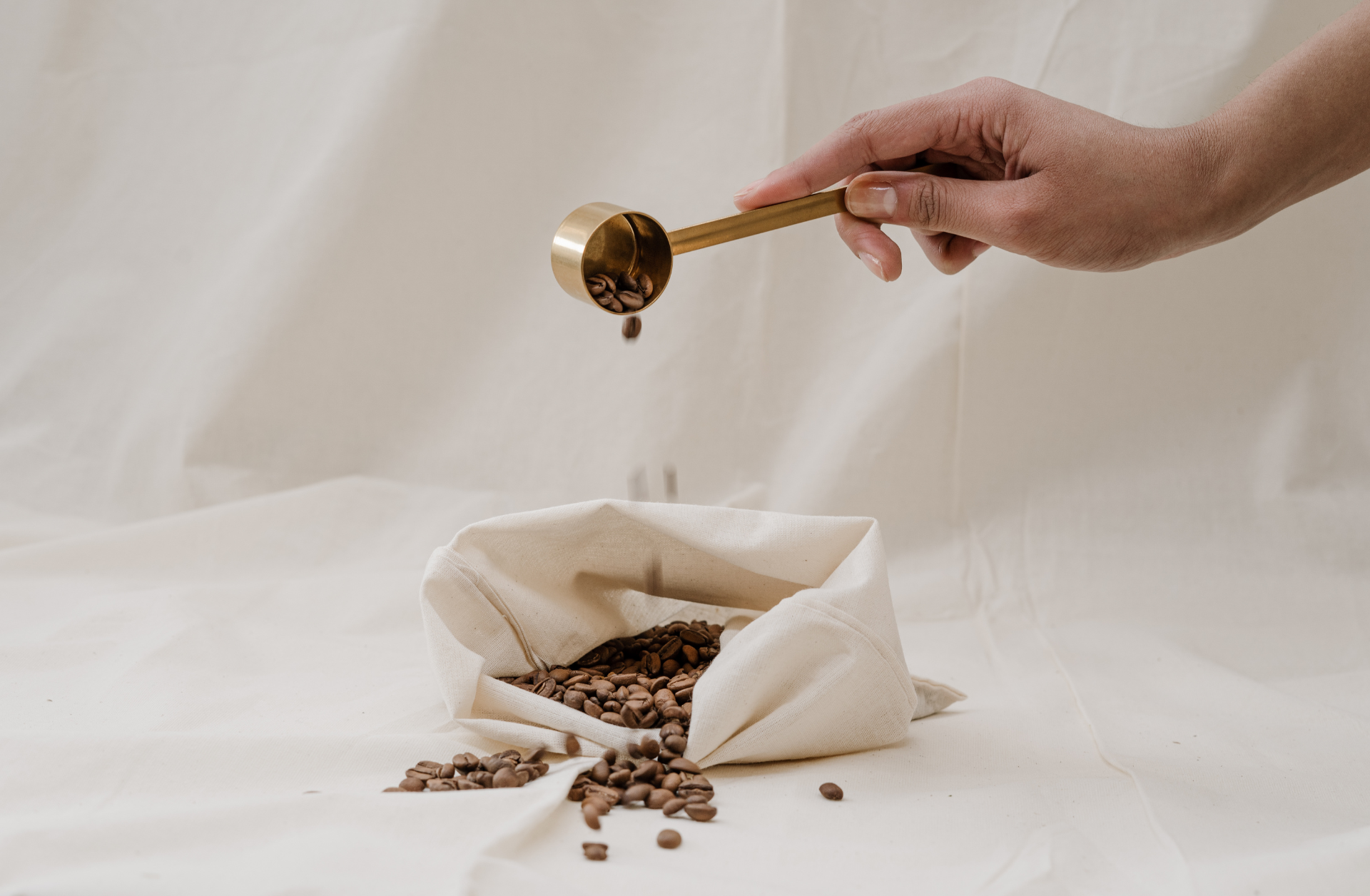
A standard coffee scoop holds about 2 tablespoons of ground coffee. If you do not have a scoop, a measuring spoon is an effective alternative.
Quick conversion:
- 1 tablespoon = ½ scoop
- 2 tablespoons = 1 full scoop
Since coffee scoop sizes can vary, many enthusiasts prefer weighing coffee for greater accuracy.
What Is the Golden Ratio for Coffee?
The golden ratio for coffee is typically between a 1:15 and 1:18 coffee-to-water ratio.
That means:
- 1 gram of coffee for every 15–18 grams of water
A 1:16 ratio is ideal for most drip coffee makers, supporting balanced flavor and optimal extraction.
Coffee Scoop Guide: Get the Right Strength Every Cup
| Cups of Coffee | Tablespoons | Scoops | Water |
| 1 cup | 2 tablespoons | 1 scoop | 6 oz |
| 2 cups | 4 tablespoons | 2 scoops | 12 oz |
| 4 cups | 8 tablespoons | 4 scoops | 24 oz |
| 6 cups | 12 tablespoons | 6 scoops | 36 oz |
| 8 cups | 16 tablespoons | 8 scoops | 48 oz |
| 10 cups | 20 tablespoons | 10 scoops | 60 oz |
| 12 cups | 24 tablespoons | 12 scoops | 72 oz |
How Brewing Methods Affect Coffee Measurements
Drip Coffee Maker
Use 1 scoop per cup with a medium grind size for balanced extraction.
French Press
French press brewing typically requires a coarser grind and slightly more coffee to achieve a fuller body and stronger flavor.
Pour-Over Coffee
Pour-over coffee benefits from precise measurements and a steady water flow to achieve optimal extraction.
Cold Brews
Cold brew requires more coffee grounds due to its extended steeping time.
Espresso
Espresso requires finely ground coffee and high brewing pressure to produce a rich flavor profile.
Why Coffee Sometimes Tastes Weak or Bitter
Weak or bitter coffee is not always caused by incorrect scoop measurements.
Other factors include:
- Incorrect grind size
- Water temperature issues
- Stale coffee beans
- Improper brew time
- Inconsistent coffee measurements
- Poor water filtration
Fresh coffee beans enhance the flavor and aroma of your brew.
Common Coffee Brewing Mistakes
Common Coffee Brewing Mistakes
- Using stale coffee grounds
- Ignoring brewing temperature
- Failing to clean coffee equipment
- Using the wrong grind size
- Measuring inconsistently
- Storing coffee improperly
Regular cleaning of equipment is essential for consistent coffee quality.
Troubleshooting Coffee Flavor Problems
| Problem | Likely Cause | Fix |
| Weak coffee | Too little coffee | Increase scoop ratio |
| Bitter coffee | Water too hot | Brew between 195°F–205°F |
| Sour coffee | Under extraction | Use finer grind size |
| Flat coffee | Stale beans | Use fresher coffee |
| Muddy flavor | Grind too fine | Adjust grind consistency |
Scoop vs Tablespoon vs Grams
Which Is Most Accurate?
Measuring in grams provides the most accurate results, as coffee density varies with roast level and grind size.
What Is the Most Beginner-Friendly Method?
Using tablespoons or a measuring scoop is the simplest method for everyday brewing.
Why Is Weighing Better Than Scooping?
Weighing removes inconsistencies caused by:
- different bean densities
- uneven scoops
- varying grind sizes
Coffee professionals often prefer scales because they improve consistency in total dissolved solids (TDS) and extraction balance.
BostonbeaN Brewing Guide for Offices
Improving office coffee requires more than purchasing quality beans. BostonbeaN supports offices with:
- Office coffee services
- Pantry services
- Bean-to-cup brewers
- Compostable pod brewers
- Water filtration systems
- Cold brew systems
- Routine equipment maintenance
- Office breakroom supplies
We also assist businesses in selecting brewing systems that match employee preferences and office size. And you can give your used coffee grounds a second life with our black earth compost program.
Tips for Making Better Coffee at Home
- Store coffee beans in airtight containers
- Buy freshly roasted coffee when possible.
- Clean brewing equipment regularly
- Use filtered water
- Adjust measurements gradually rather than making drastic changes.
Tips for Making Better Coffee in the Office
- Rotate fresh coffee regularly.
- Keep brewing stations clean.
- Use proper water filtration.
- Match the brewer size to office usage levels.
- Offer a variety of roast levels and beverage options.
Coffee Brewing FAQ
What happens if I use too many scoops of coffee?
Using too much coffee can result in bitter, overpowering flavors and a harsh aftertaste.
Why does my coffee taste weak even when I use enough scoops?
Weak coffee may result from incorrect grind size, stale beans, low brewing temperature, or under-extraction.
What water temperature is best for brewing coffee?
Most experts recommend brewing coffee between 195°F and 205°F.
Does dark roast require fewer scoops than light roast?
Dark roast beans are less dense than light roast beans, which can cause inconsistencies when measuring by scoop rather than by weight.
What grind size works best for drip coffee makers?
A medium grind is generally best for drip brewing, as it supports balanced extraction.
To improve coffee quality in your office, contact BostonbeaN to learn more about our office coffee solutions, brewing equipment and breakroom services designed to keep your team energized.

